CDISC Dataset-XML
Category: Clinical-trial dataset exchange
CDISC Dataset-XML is an XML transport for tabular research datasets. Convert-Pheno reads Dataset-XML v1.0 with required Define-XML v2.0 or v2.1 metadata, then groups the resolved SDTM rows by participant. Tests cover the documented SDTM domains and Define-XML versions, but not every Dataset-XML generator.
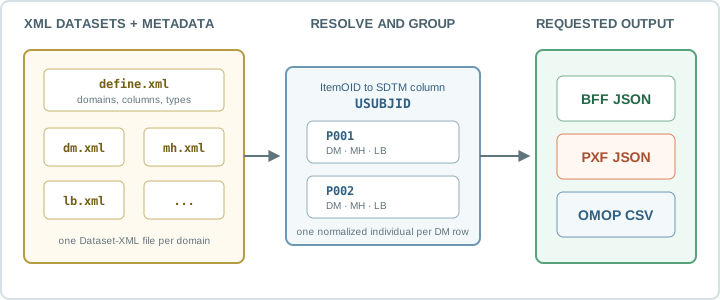
What You Need
Supply one Dataset-XML file per SDTM domain and the Define-XML file describing those domains:
convert-pheno \
  -idataset-xml dm.xml mh.xml lb.xml \
  --define-xml define.xml \
  -obff individuals.json
The current route requires:
- exactly one
DMdataset with one uniqueUSUBJIDper participant - matching study and metadata-version references across the files
- one metadata-defined SDTM domain per Dataset-XML file
- known and non-duplicated row and item identifiers
See the Dataset-XML recipes for PXF and OMOP-CDM commands.
How It Is Converted
Define-XML supplies variable names, order, labels, data types, and controlled terminology metadata. After that resolution, Dataset-XML uses the same SDTM mapping as Dataset-JSON:
| SDTM domain | Main converted content |
|---|---|
DM | identifier, sex, ethnicity, geographic origin, birth date, and vital status |
MH, AE | diseases and phenotypic features |
LB, VS | measurements, units, ranges, and dates |
CM, EX, PR | treatments and procedures |
TS | dataset and cohort metadata |
Other participant-level domains remain available under
info.datasetXml.domains. Use --no-source-info to omit that raw copy while
retaining mapped BFF fields.
See Dataset-XML to BFF for transport details and Dataset-JSON to BFF for the shared field-level mapping.
Terminology
When Define-XML provides an nci:ExtCodeID, Convert-Pheno looks up that NCIT
identifier exactly and uses its canonical label. An optional Mapping V2 file
with source.profile: sdtm can add reviewed direct terms, aliases, or label
queries for fields without an authoritative identifier:
convert-pheno \
  -idataset-xml dm.xml ae.xml \
  --define-xml define.xml \
  --mapping-file sdtm-terminology.yaml \
  --term-audit terminology.tsv \
  -obff individuals.json
If neither Define-XML nor the mapping resolves a value, the output uses a
source-derived CDISC: identifier. This preserves SDTM field/value identity
without claiming an external ontology mapping.
For OMOP output, source-derived CDISC: identifiers are not assumed to be
Athena concept codes. The BFF-to-OMOP stage can still resolve a unique active
standard concept from a reviewed identifier, an official Maps to
relationship, or a label in the expected OMOP domain. Otherwise it emits
concept 0. Use a reviewed terminology mapping when the OMOP concepts carry
analytical meaning for the study.
The baseline fixture output shows fallback behavior. The terminology fixture output shows both exact NCIT resolution and an intentional fallback. See Mapping Files and Terminology Search before adapting the example to study data.
Dataset-XML input is non-streaming. The Define-XML metadata, domain datasets, and grouped participant records must fit in memory.